Provides evaluators with an efficient method of systematically gathering and organizing the information needed to diagnose autism spectrum disorder (ASD) in children, adolescents, and adults
Qualitative description of the student covering three areas: Language and Communication, Social Relationships and Emotional Responses, and Sensory Use and Interests
Level C required.
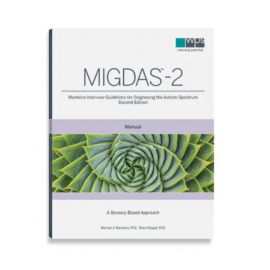
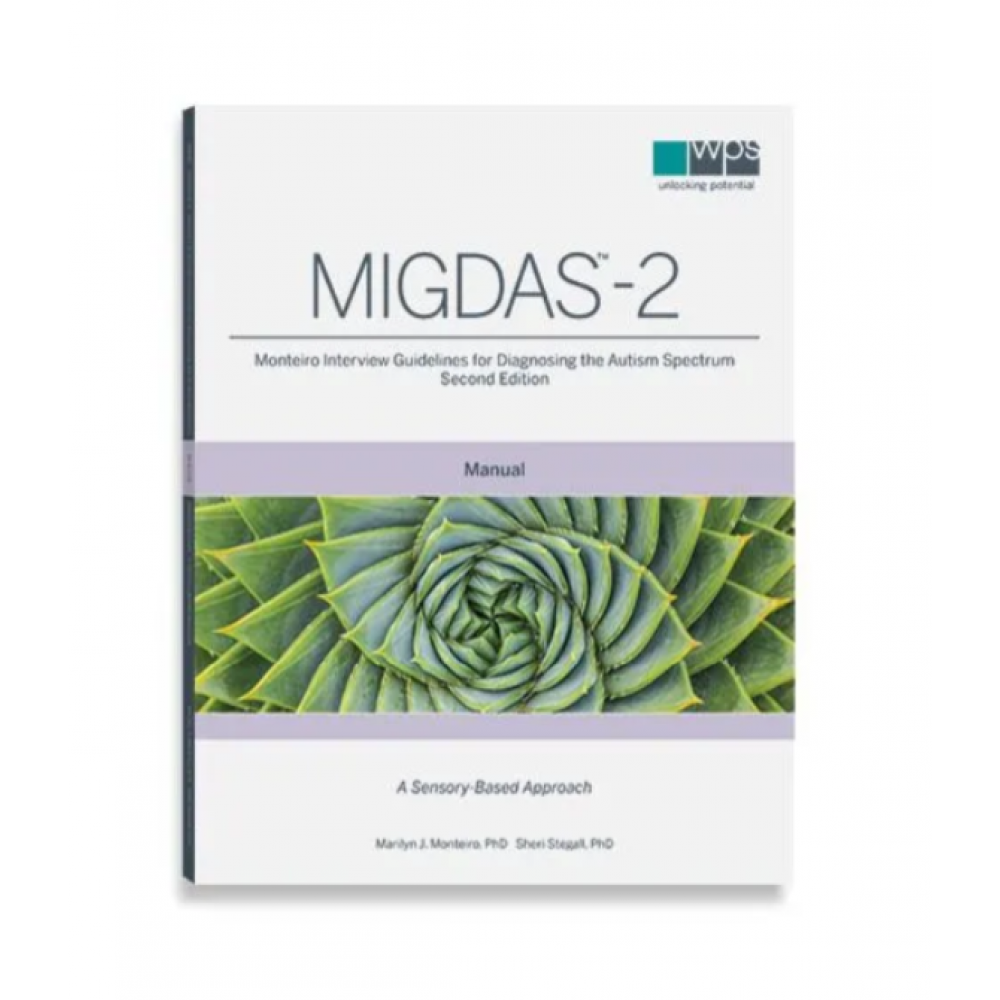
The Monteiro Interview Guidelines for Diagnosing the Autism Spectrum, Second Edition is a sensory-based process for gathering and organizing the qualitative information needed to diagnose autism in children, adolescents, and adults. The process includes guidelines for gathering information from parents/caregivers and teachers, and for conducting a sensory-based interview with the individual being evaluated. The end result is a comprehensive behavioral profile that describes the individual’s distinct way of relating to the world, supplementing assessment scores and informing diagnosis and treatment planning. The MIGDAS-2 process is designed to facilitate writing a narrative evaluation report and providing diagnostic feedback using language that is easily understood by parents and others involved in the individual’s care.
Key Features of the MIGDAS-2 Assessment Process
- Interactive interview techniques: The MIGDAS-2 provides detailed, concrete guidelines for conducting interactive diagnostic interviews with children, adolescents, and adults suspected of having ASD.
- Parent/caregiver and teacher participation: The MIGDAS-2 provides structured guidelines for obtaining key information from parents/caregivers and teachers about the individual’s behavior in home and school settings.
- Comprehensive qualitative information: The MIGDAS-2 is a unique evaluation tool that guides the evaluator to make a diagnosis based on direct interactions with the individual being evaluated and the individual’s parents/caregivers and teachers.
- Sensory-based approach: Emphasizing the use of sensory materials and encouraging discussion of areas of high interest to the individual, the MIGDAS-2 process provides a system for evaluators to gather distinctive examples of behavior patterns often seen in individuals with ASD.
The MIGDAS-2 was developed as an outgrowth of extensive diagnostic work with individuals on the autism spectrum, as well as their families and teachers, and considerable collaboration with autism evaluation teams in public and private schools. The MIGDAS-2 process provides an organized, systematic way to elicit and document an individualized behavioral profile descriptive of the singular presentation of ASD in order to better inform autism diagnosis and treatment planning.
The MIGDAS-2 can be used by independent evaluators and evaluation teams, and it is ideally suited for a variety of settings, including private practices, schools, and hospitals. Because the MIGDAS-2 process integrates the multiple sources of information that must be considered when diagnosing ASD, it helps those involved in the evaluation process better understand the way in which autism spectrum differences specifically affect the individual being evaluated. The sensory-based diagnostic interview allows for an authentic assessment experience for the child, adolescent, or adult being evaluated. The qualitative behavioral profile obtained through the use of the MIGDAS-2 also assists evaluators when considering comorbidity and making differential diagnoses, writing narrative evaluation reports, and providing diagnostic feedback to participants in the evaluation process.
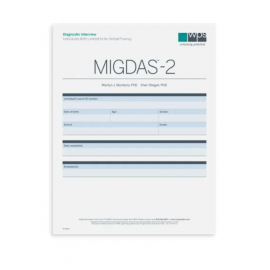
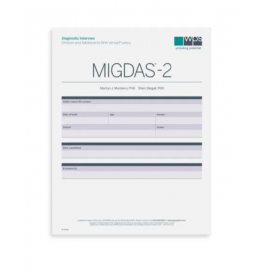
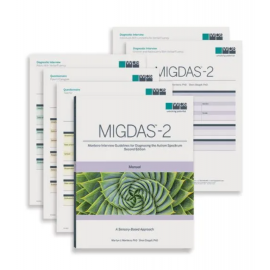
The MIGDAS-2 includes five evaluation protocols: Parent/Caregiver Questionnaire, Teacher Questionnaire, Diagnostic Interview for Individuals With Limited to No Verbal Fluency, Diagnostic Interview for Children and Adolescents With Verbal Fluency, and Diagnostic Interview for Adults With Verbal Fluency.
The Parent/Caregiver Questionnaire and the Teacher Questionnaire provide detailed sets of questions designed to gather a comprehensive narrative about the individual being evaluated from the point of view of his or her parents/caregivers and/or teachers. The questionnaires can be used to facilitate an in-person interview or can be completed independently by having parents/caregivers or teachers write their responses directly on the questionnaire.
The Diagnostic Interview protocols are the cornerstone of the MIGDAS-2 assessment process. These protocols guide evaluators through the process of collecting and documenting samples of the individual’s behavior in the three key areas of development that are affected in ASD: Sensory Use and Interests, Language and Communication, and Social Relationships and Emotional Responses.
The Diagnostic Interview for Individuals With Limited to No Verbal Fluency is designed for use with individuals who have not yet acquired the use of functional language. It is suitable for use with young children (i.e., preschool-aged children and toddlers who are able to engage in sensory-based play), as well as with older children, adolescents, and adults who display limited language and accompanying intellectual impairment.
The Diagnostic Interview for Children and Adolescents With Verbal Fluency is designed for use with children and adolescents who use language in a fluent capacity or who have acquired language but whose fluency is still emerging (i.e., language is not yet used with full fluency across settings or topics). It is appropriate for use with children as young as preschool age as well as with older children and adolescents.
The Diagnostic Interview for Adults With Verbal Fluency is designed for use with adults who have acquired language skills and use language in a fluent capacity. It is also appropriate for use with verbally fluent adolescents transitioning to adulthood. The interview is structured so that the evaluator has the option of including the individual’s adult partner or parents/caregivers in the session.
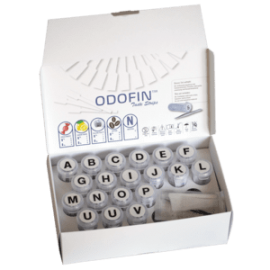
The MIGDAS-2 interviews require the use of common, sensory-based toys and materials (not included in the Kit purchase). The use of these materials and suggestions for building a sensory-based materials kit are described in the MIGDAS-2 Manual. Click here for more detailed descriptions of sensory-based materials and suggestions for where to obtain such materials.
Terms Often used to search for (MIGDAS-2) Monteiro Interview Guidelines for Diagnosing the Autism Spectrum, Second Edition
Migdas 2, autism diagnosis questionnaire, autism assessment questionnaire, Monteiro, interview, behavior description interview
優點
為評估者提供一種有效率的方法,系統性地蒐集與整理診斷自閉症譜系障礙(ASD)所需的資訊,適用於兒童、青少年及成人
評分方式
以質性描述呈現個案在三個領域的表現:
施測時間
依形式而定;約30至90分鐘
適用年齡
幼兒、兒童、青少年與成人
出版年份
2018
施測資格
需具備C級資格
簡介
《蒙泰羅自閉症譜系診斷訪談指引(第二版)》是一套以感覺經驗為基礎的評估流程,用於蒐集與整理診斷自閉症所需的質性資訊,適用於兒童、青少年與成人。該流程包含:
- 向家長/照顧者及教師蒐集資料的指引
- 與受評者進行感覺導向訪談的方式
最終可形成一份完整的行為概況,描述個體與世界互動的獨特方式,補充測驗分數,並協助診斷與治療規劃。此工具亦有助於撰寫敘述性評估報告,並以易於理解的方式向家長及相關人員提供診斷回饋。
MIGDAS-2 的主要特色
- 互動式訪談技術:提供具體且詳細的指引,用於進行ASD診斷訪談
- 家長/照顧者與教師參與:系統化蒐集家庭與學校情境中的行為資訊
- 全面的質性資料:透過多方互動進行診斷判斷
- 感覺導向方法:運用感官材料與個體興趣,引出典型行為模式
測驗概念與應用
MIGDAS-2 源自大量自閉症個案的臨床經驗,以及與家庭、教師及評估團隊的合作。其提供一套有系統的方法,用於引出並記錄個別化的行為特徵,以提升診斷與治療規劃的準確性。
此工具適用於多種場域,例如:
並整合多元資訊來源,使評估者能更全面理解自閉症對個體的影響。
評估內容(五大工具)
- 家長/照顧者問卷
- 教師問卷
- 無或有限語言能力者診斷訪談
- 具語言能力之兒童與青少年診斷訪談
- 具語言能力之成人診斷訪談
各訪談工具說明
用於蒐集完整敘述性資料,可用於訪談或自行填寫
評估三大核心領域:
- 感覺使用與興趣
- 語言與溝通
- 社交關係與情緒反應
- 無語言/低語言能力訪談
適用於幼兒或語言能力有限者
適用於語言發展中或已具流暢語言者
適用於成人或即將進入成年期的青少年,可包含伴侶或家屬參與
其他說明
MIGDAS-2 訪談需搭配常見的感覺性材料(如玩具等),相關建議可於手冊中取得。